

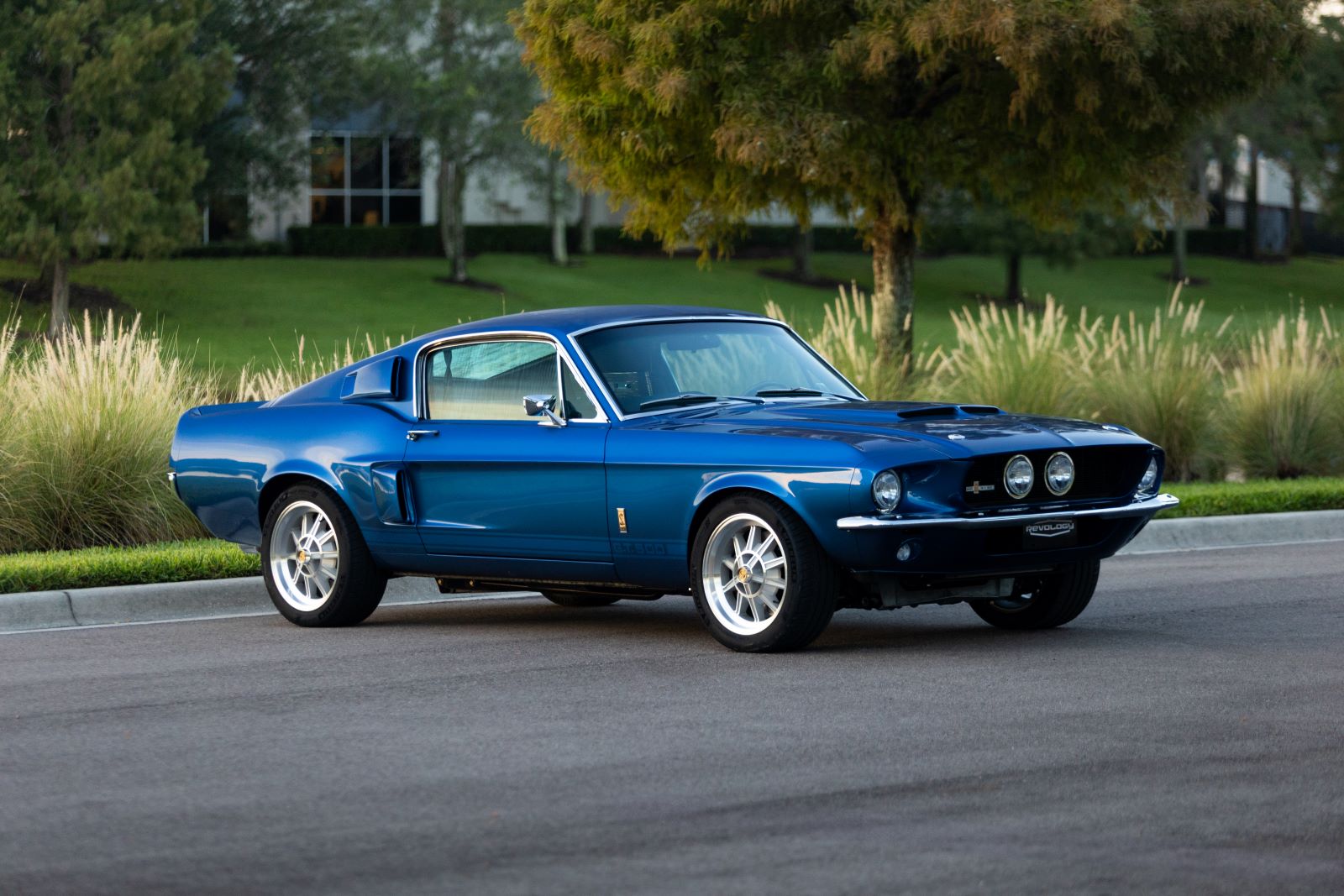
When Car and Driver took the Shelby GT500 of 1967 out to the track, they needed to learn what the big-block Mustang had to offer. The GT500 featured a huge 428-cubic-inch V-8 under the hood aka the Cobra Le Mans engine, as a result of which Carroll Shelby made a bid to make the car combine the vulgar muscularity with practical road etiquette. In spite of the fact that it is considered to be a monster of a muscle car, the GT500 was much more sophisticated and competent than it was expected.
Engine and Performance
At the core of the GT500 was a 428-cubic-inch V-8 that offered up to factory-rated horsepower of the mid-300s and a strong 420 lb-ft of torque. This combination delivered impressive acceleration for the period, achieving a zero-to-60-mph time in the mid-6-second range and a quarter-mile run of about 15.0 seconds at roughly 95 mph. These performance figures form a major part of the 1967 Shelby GT500 appeal, as they positioned the car competitively among its contemporaries, even if it was not dramatically faster than the average performance car of the mid-1960s.
The big engine was surprisingly civil at cruise speed, despite its high displacement. The V-8 in the GT500 was also powerful in midrange and had a deep, throaty exhaust sound as opposed to a race-car rudeness because some race-based powerplants have. This helped it in balancing and use in long highway hauls in addition to spirited driving.
Handling and Comfort
In contrast to the earlier Shelby Mustangs which were virtually barbarian in their handling the 1967 GT500 was designed with a more adult driving experience. It was not as rough and had a more predictable handling compared to the wild GT350s that came before it. The suspension hardware was not as extreme, with adjustable shocks used in place of some of the racing parts and traction bars removed, but the overall package was not as compliant without losing any stability.
The GT500 had understeer on the road, which changed to throttle application, then the car was able to carve into corners with unexpected agility at 3,500 plus pounds. The steering was fast and responsive, particularly when using the traditional wood-rim steering wheel, which provided the driver with confidence when making an evasive move or performing spirited driving. Nevertheless, even the power-assisted brakes may be hyper-sensitive and they may need to be modulated carefully to avoid lock-ups.
Interior and Features
Interior-wise, the GT500 still had most of the interior of the regular Mustang albeit with considerable upgrades. The test car was also fitted with interiors that were comfortable including an automatic transmission, power steering and power brakes which enhanced a more refined touring experience. Another safety innovation was an actual rollover bar – possibly the first to be available in a production car – and shoulder harnesses that offer greater security to occupants without the inconvenience of standard racing belts.
Some of the controls such as the air-conditioning arrangement were not user-friendly, but the overall ergonomics enhanced relaxed driving. The steering wheel with wood rims was particularly lauded with regard to its comfort and feel.